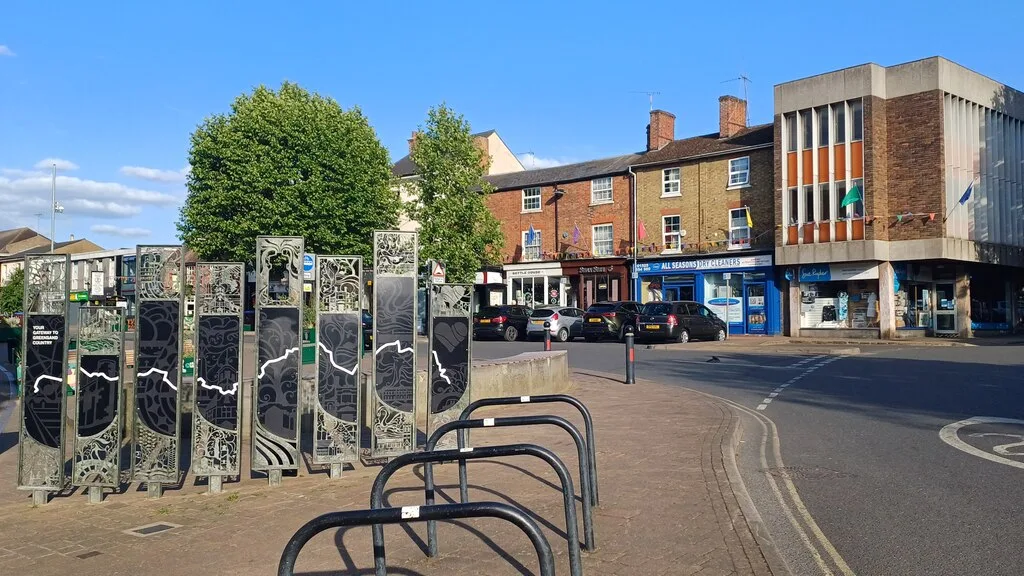

An examiner says the Leighton-Linslade Neighbourhood Plan can go to a public vote, with two green spaces taken out. The vote could come by 25 February.
The Leighton-Linslade Neighbourhood Plan has passed its independent examination and should go to a referendum. Residents of the town could be voting on it by the end of February.
The examiner, David Kaiserman, found the plan meets the legal tests once a short list of changes is made. His final report, dated 1 November, is published in the papers for the town council’s meeting on Monday 30 November. (Leighton-Linslade Town Council, Council meeting book, 30 November 2026)
Overview
- What: the town’s first neighbourhood plan, covering 2024 to 2042, has been cleared to go to a public vote.
- Changes: two green spaces off Dunnock Drive and Aurora Rise come off the protected list, and the separate schools policy is folded into another policy.
- Next: Central Bedfordshire Council has until Monday 7 December to issue its decision and confirm a referendum.
- When you vote: no date is fixed. The latest for a stand-alone vote is Thursday 25 February 2027, or it could be held alongside the council elections on Thursday 6 May 2027.
What the examiner decided
Mr Kaiserman was appointed by Central Bedfordshire Council on 24 August with the town council’s agreement. He worked from written comments only and held no public hearing. He made an unaccompanied visit to the town on 15 October.
His conclusion is that, “subject to a number of recommendations”, the plan meets all the legal requirements. He is “pleased to recommend that it should proceed to referendum”. He saw no reason to extend the voting area beyond the town boundary.
His main changes are:
- remove two sites, Dunnock Drive (site 57) and Aurora Rise (site 76), from the list of Local Green Spaces
- delete the separate education policy and instead list the town’s 20 schools and colleges inside the community assets policy
- reword parts of the policies on town centre renewal, land south of the High Street and housing mix
- make the policies easier to pick out on the page, with text boxes or colour
The meeting papers note that the examiner’s recommendations “are not subject to negotiation but must be accepted” for the plan to go to a vote.
Why two green spaces were removed
The plan proposed 39 Local Green Spaces. That designation gives land protection from development in line with Green Belt policy.
Only two of the 39 drew an objection. Both belong to Arnold White Estates Ltd, which argued through its planning agent that they are grassland strips crossed by 400kV power lines between parts of a housing estate.
The owner’s case was that both sites already have planning permission for housing, granted on appeal in 2007. They were left unbuilt only because of wayleaves granted to National Grid, and the council uses them as open space under a temporary licence.
The examiner agreed that “little evidence” showed the land was “demonstrably special”. He gave “substantial weight” to national guidance that a Local Green Space will rarely be right where land has planning permission. The referendum version now lists 37 protected green spaces.
What residents asked for that did not change
The examiner summarised a “large number” of comments from residents. Many supported the plan but wanted it to go further:
- keep development out of the open countryside west of Linslade, especially around footpath no. 60
- add three more sites to the Local Green Spaces list
- put roads, schools and health services in place before or alongside new homes, including land kept for a health hub
- stronger protection on the environment and flood risk
He called these “legitimate issues” but said his role was limited to checking the plan against the legal tests. He made no changes in response to them. He also declined to add further green spaces put forward by South Bedfordshire Friends of the Earth. He said the right way to consider them would be after landowners had a chance to comment.
What is in the plan
The referendum version has 12 policies. It does not allocate any sites for new housing. Among the policies:
- Town centre: new homes at ground floor level only outside the main shopping streets; shopfronts should avoid uPVC and oversized signs; partial pedestrianisation or limits on traffic at set times would be supported.
- Bridge Meadow and the canal: buildings no higher than four storeys, homes facing the river or canal, and the flood-prone south-east corner of the land south of Leighton Road kept as green space.
- Land south of the High Street: backed for a mixed regeneration scheme that is “heritage-led”. Central Bedfordshire Council is the majority landowner. The plan notes that the site holds remains of the Rothschild stables and a Second World War telephone exchange.
- Infrastructure priorities: a new neighbourhood health centre, a large indoor space for meetings and events, an exhibition space for the town’s history, a creative and cultural space, and more indoor and outdoor sports courts.
The plan says NHS Property Services supports the principle of a new health centre. It also records that just under 3,000 homes have been built in Leighton-Linslade since 2011.
When the vote could be
A note from the town council’s planning consultant sets out the timetable. Central Bedfordshire Council’s five weeks to decide began on Tuesday 3 November and end on Monday 7 December, unless a later date is agreed.
If the decision is published on 7 December:
| Option | Latest date |
|---|---|
| Stand-alone referendum | Thursday 25 February 2027 |
| Alongside the Central Bedfordshire Council elections | Thursday 6 May 2027 |
| Latest possible date alongside another poll | Friday 4 June 2027 |
What it means for you
- The plan starts to count now. Once the council issues its decision, anyone deciding a planning application in the town, including inspectors on appeal, must have regard to the plan. The consultant’s note says national guidance allows it “significant weight” at that stage.
- A yes vote makes it law for planning. After a successful referendum the plan becomes part of the development plan straight away. Planning decisions in the town must then follow it unless there are strong reasons not to.
- Homes near Dunnock Drive and Aurora Rise: the green strips by your homes will not get Local Green Space protection through this plan.
- To read it yourself, the examiner’s report and the full referendum version are in the town council’s meeting papers for 30 November. The meeting is at 7.30pm at Astral Park Sports and Community Centre on Johnson Drive, and the agenda opens with questions from the public.
Sources
- Leighton-Linslade Town Council, Council meeting book for 30 November 2026, containing the examiner’s final report of 1 November 2026, the referendum version of the plan (November 2026) and the consultant’s client advice note on the timetable, read on 20 November 2026.
Have your say