
Alex Mayer's Parliament tribute honours the Dunstable Met Office staff whose forecast helped delay D-Day by a full day. Updated November 2026.
The wartime staff of the Met Office in Dunstable, whose forecast helped persuade General Eisenhower to put off the D-Day landings by a day, have been remembered in Parliament by Alex Mayer, MP for Dunstable and Leighton Buzzard.
She dedicated her tribute in Parliament’s annual Garden of Remembrance to the military and civilian staff who worked at the town’s weather headquarters, according to a news release from her office on Saturday. Their predictions helped the Allied commander delay the invasion and avoid a gale that, in the release’s words, “could have spelled disaster”.
The tribute comes in the year the story reached cinemas. The film Pressure, released in September, dramatises the countdown to the forecast, and the release says local audiences noticed Dunstable mentioned five times. It was made with help from the Met Office, whose archives supplied original weather charts and other historical material to recreate the events of June 1944. The Met Office has published its own verdict on how accurate the film is.
Camouflage, teleprinters and dispatch riders
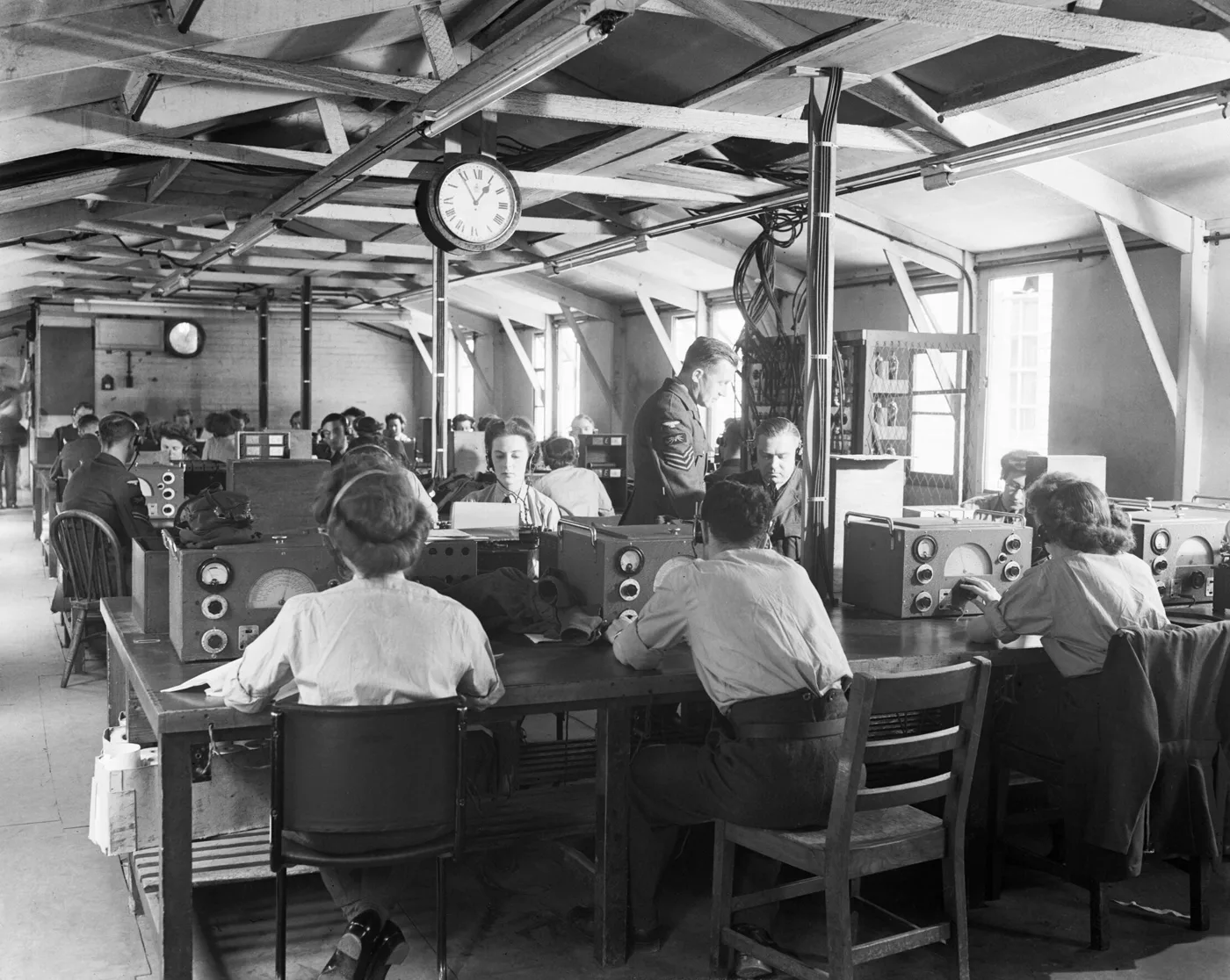
The Met Office moved its central forecasting operations to Dunstable in 1940. Behind camouflage and tight security, RAF personnel, members of the Women’s Auxiliary Air Force and civilian meteorologists worked around the clock.
Teleprinters rattled out coded weather reports day and night, and motorcycle dispatch riders carried information between Dunstable, London, Bletchley Park and Q Central. Staff worked through complex calculations on mechanical adding machines.
Few of them knew what it was all for. Ernest Bilham, Head of Forecasting at Dunstable, was one of a handful of people in the world trusted in advance with the location of the landings. After D-Day he wrote to his staff:
“Now the assault on Europe has begun you will understand why I emphasised the great importance of the work you came to ETA (code name for Dunstable) to do and why there had to be [so] much secrecy about its purpose. I feel sure you will feel proud to have been so closely associated with the forecasting operations for this tremendous adventure.”
The archives also show a lighter side. Brian Audric, a founder member of Dunstable’s decoding unit, remembered a “happy place to work, with a very friendly and lively atmosphere”. Jean Cleminson, a WAAF wireless operator, found the work interesting but called the overnight shifts “punishing”.
“It deserves to be remembered with pride”
Mayer said: “My tribute in Parliament remembers the vital contribution of Dunstable’s weather heroes.
“Hollywood has brought the drama of the D-Day forecast to the big screen.
“But behind the senior figures taking those momentous decisions were men and women working around the clock in Dunstable, piecing together the weather picture.
“At the time their work was shrouded in secrecy then. Today, it deserves to be remembered with pride.”
What it means for you
Dunstable shares a parliamentary constituency with Leighton Buzzard, and the tribute marks a piece of local wartime history that the film has put back in front of a big audience. Anyone who has seen Pressure and wants the real story can start with the Met Office’s account of what the film got right and wrong.
Leighton Buzzard’s own Remembrance Sunday service is tomorrow, Sunday 8 November, in Church Square: the 10.55am service and road closures.
Have your say