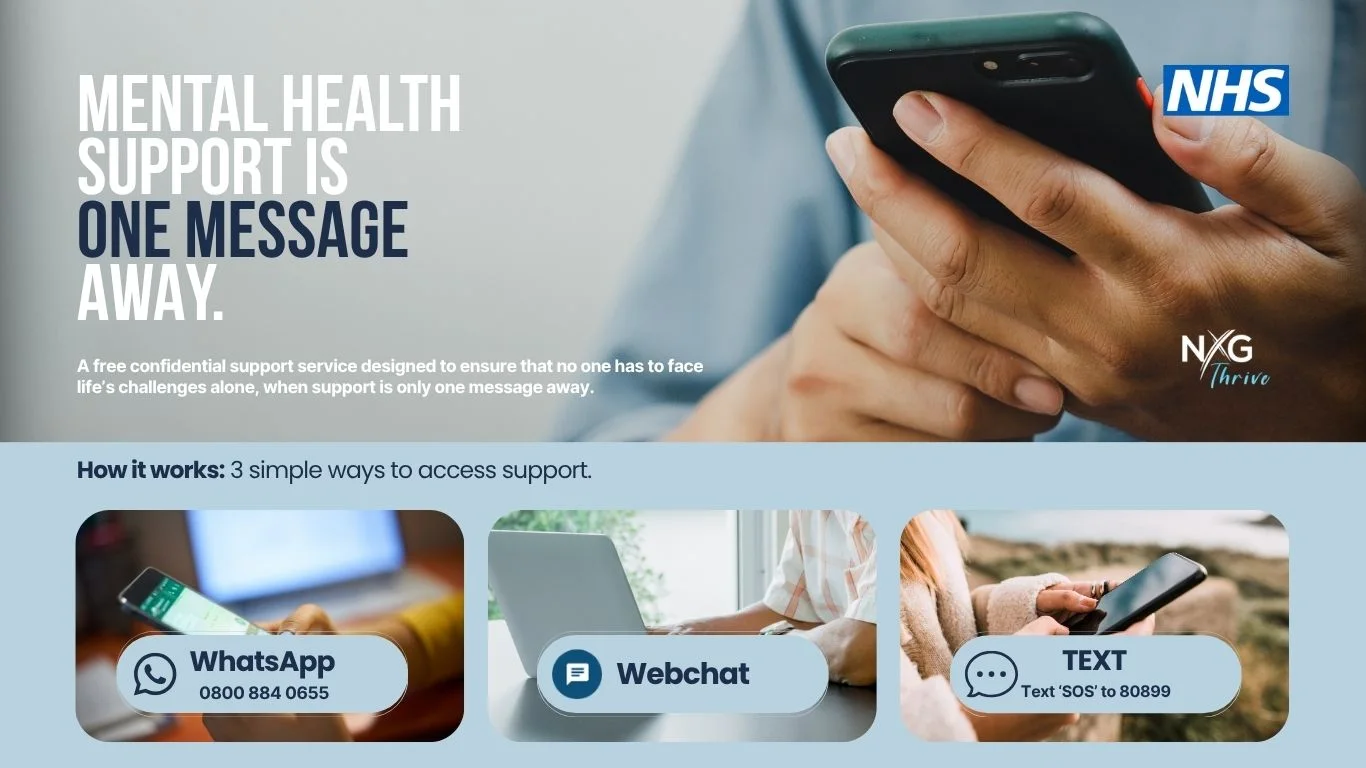

Text SOS to 80899 or WhatsApp 0800 884 0655 for free, confidential NHS-funded support at any hour. The new service is open to all ages across Bedfordshire.
Anyone in Leighton Buzzard or elsewhere in Bedfordshire who is struggling with their mental health can now text SOS to 80899, at any hour, and reach a mental health professional for free. The same service answers WhatsApp messages on 0800 884 0655 and runs a webchat at nxgthrive.co.uk/crisis-text-service.
If you or someone else is in immediate danger, call 999. The service says plainly that it is not an emergency response channel.
It is open 24 hours a day to people of all ages, whether or not they have had mental health support before, according to a news release on Wednesday from Alex Mayer, MP for Dunstable and Leighton Buzzard. There is no referral and no minimum age.
The local NHS announced the launch the same day. It is commissioned by NHS Central East, NHS Norfolk and Suffolk and NHS Essex Integrated Care Boards and run by a provider called NXG Thrive. As well as Bedfordshire, it covers Luton, Milton Keynes, Cambridgeshire, Peterborough, Hertfordshire, Norfolk, Suffolk and Essex. A webinar for local partners gave Wednesday 28 October as the day the numbers went live.
Why text
Mayer said: “For some people experiencing anxiety, loneliness or emotional distress, sending a text or WhatsApp message feels easier than picking up the phone. This service is aimed at them. And if that helps someone ask for help rather than suffer in silence, it could make a real difference.
“This Government is committed to investing in and improving our NHS for people with both physical and mental health needs.”
Dr Andrew Rochford, executive medical director for NHS Norfolk and Suffolk Integrated Care Board, said: “We know that reaching out for help takes courage. For many people, especially younger people, sending a message can feel far less daunting than making a phone call or speaking face-to-face.”
NXG Thrive’s webinar names others it expects to prefer text, including men, neurodivergent people, LGBTQ+ communities and people in rural or isolated areas, as well as people who cannot speak safely out loud where they are.
Who answers
The news release describes “a trained responder”. The NHS notice goes further: the service is “entirely staffed by registered health and care professionals”, from backgrounds including psychology, counselling, social work and mental health nursing.
The webinar says each has at least three years’ experience since qualifying, working with complex and high-risk cases, and that a shift supervisor is on every shift. The webchat also has real-time translation, so a responder can talk to someone in their first language.
NXG Thrive says people can write about “emotional distress, anxiety, loneliness, overwhelming thoughts or anything that is making your day difficult”, and that a first message can be as simple as “I need someone to talk to”. You do not have to be certain that what you are feeling counts as a crisis.
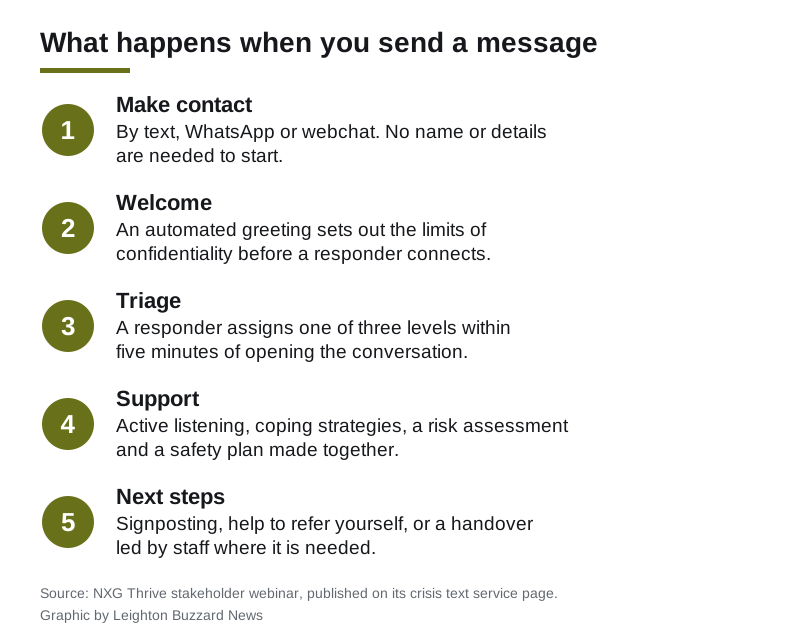
In the webinar, NXG Thrive sets out those steps. Nobody needs to give a name or any details to start. An automated greeting explains the limits of confidentiality, then a responder assigns one of three levels of urgency within five minutes of opening the conversation. Support follows: active listening, coping strategies, a risk assessment and a safety plan made together. The last step is signposting, help to refer yourself, or a handover led by staff where it is needed.
Each conversation is a single session. The service does not offer ongoing therapy or a diagnosis, and the NHS says it sits alongside existing services rather than replacing them. The webinar names the NHS 111 mental health option among them.
What stays private
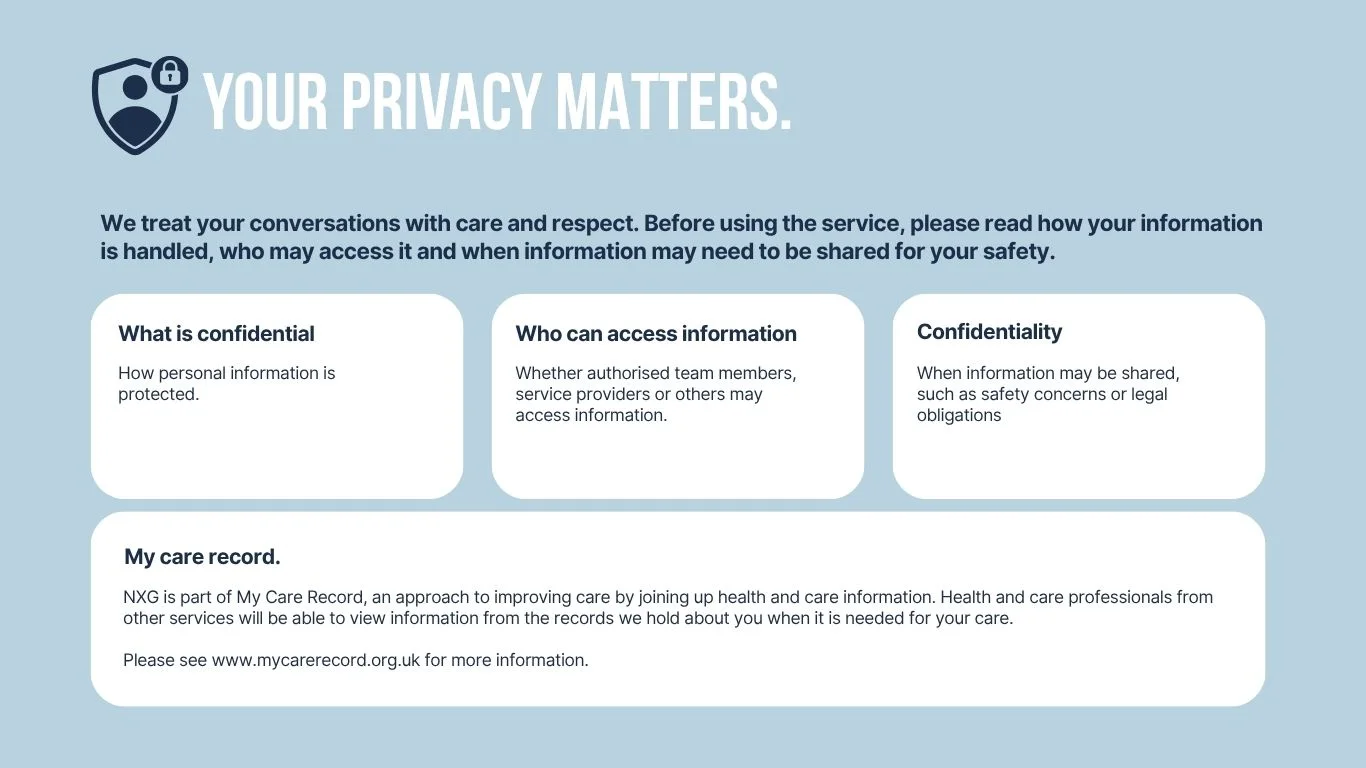
The service calls itself confidential, with limits, and asks people to read its confidentiality and privacy notice. That notice says it will share information without consent where there is an imminent risk to life, where a child or a vulnerable adult is at risk of serious harm, or where the law or a court requires it. It says it then shares only the minimum needed to find and protect someone: the mobile number, available location data such as an IP address, and redacted extracts of the messages.
It says it does not sell or share transcripts for marketing, and that statistics with identifying details removed go to a national NHS mental health dataset.
What the earlier service’s figures show
The release calls the service new, but it follows an earlier text service, which the webinar does not name. NXG Thrive says 26.6% of the people who used that service were under 18, and it planned its staff training around that figure. It also says about 1.5% of conversations, 4 in 264 over five months, needed what it calls an active rescue. That is the outside help it brings in where there is a real and immediate risk to life.
NXG Thrive says it will monitor its own figures from the launch, and it plans a review with partners within three months of going live.
The release says improving mental health support is a key NHS priority across Bedfordshire. Nationally, the Government says mental health spending is forecast to reach a record £16.1 billion this year. Neither the release nor the NHS notice says what this service costs.
What it means for you
- To start a conversation: text SOS to 80899, send a WhatsApp message to 0800 884 0655, or use the webchat.
- Cost: the service is free, though it notes that standard messaging or data charges may depend on your provider.
- Who can use it: anyone of any age living in or currently in the area, with no referral. If you are worried about someone else, you can get in touch too, and the webinar says you will be supported in your own right.
- In immediate danger: call 999. Do not wait for a text reply.
Have your say