
No change to Council Tax Support in 2027/28: 10,284 working-age households keep a 75% maximum discount, with the same income bands. Councillors look at it on 3 November.
Central Bedfordshire Council plans to keep this year’s cut to Council Tax Support for another year. Working-age households on the lowest incomes would again pay at least a quarter of their bill in 2027/28.
The proposal is in a report to the council’s Corporate Resources Overview and Scrutiny Committee, which meets on Tuesday 3 November. The report says plainly: “The Council is not proposing any changes to the scheme for 2027/28.” (Central Bedfordshire Council, agenda supplement, 27 October 2026)
What changed in April, and what would stay
From 1 April 2026 the council lowered the most help any working-age household can get from 100% of the bill to 75%. The report says the change was made to save £3.45 million, of which £2.9 million is the council’s own share. The rest falls to the police, the fire service and the town and parish councils.
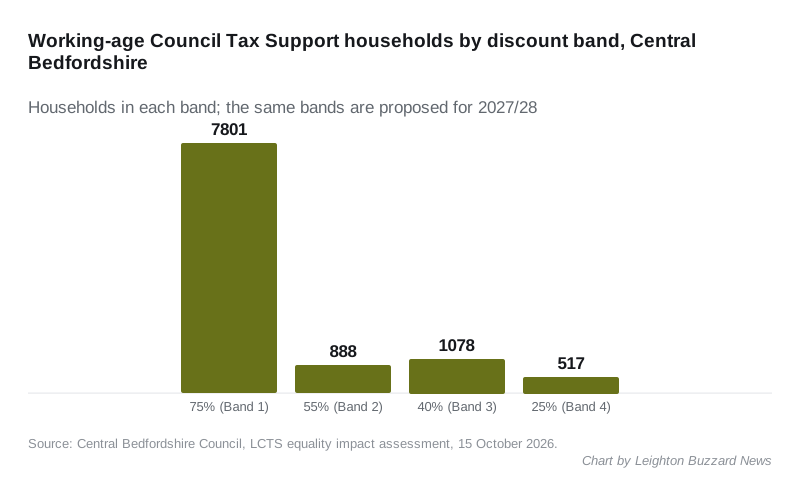
The draft scheme for 2027/28 keeps all four discount bands as they are:
| Band | Discount | Working-age households now in it |
|---|---|---|
| Band 1, the lowest incomes | 75% | 7,801 |
| Band 2 | 55% | 888 |
| Band 3 | 40% | 1,078 |
| Band 4 | 25% | 517 |
| Total | 10,284 |
The household counts come from the equality impact assessment attached to the report, dated 15 October. The average award is £23.56 a week. (Appendix A, equality impact assessment)
The income limits for each band are also unchanged. The draft scheme reproduces this year’s weekly figures exactly. A single person with no children still gets the full 75% up to £126.48 a week and nothing above £310.02. A couple with two children keeps a 25% discount up to £533.24. (Appendix B, draft 2027/28 scheme, Schedule 1)
Who is in the scheme
The assessment counts 15,246 households receiving Council Tax Support, just over 11% of all households in the district. Of those:
- 4,962 are of pension age. Their support is set by national rules, can still reach 100%, and the council cannot change it.
- 10,284 are of working age. These are the households the local scheme covers.
- 2,549 are recorded as disabled only, with no carer or earnings in the household, and 2,459 of them are in the 75% band.
- 2,042 are recorded as employed only. They are spread more evenly across the bands, with 392 on the smallest 25% discount.
- 4,499 are lone parents, more than the 4,236 single people without children.
Why the council wants to wait
The report says it is too soon to judge the April cut. The council is not yet a full year into the new scheme. Many people who miss payments go on to pay later or agree an instalment plan after recovery action, so the true effect on collection will not be clear until the year has run.
Keeping the scheme for 2027/28, the report says, would let the council measure a full year of:
- council tax collection rates, compared with other councils that ask for a similar minimum payment
- the cost of running the scheme
- take-up of its discretionary Council Tax Reduction for people in hardship
- the knock-on demand on its Crisis and Resilience Fund
The report also points to the government’s response to its “Modernising and improving the administration of Council Tax” consultation, published this month. It includes a move to 12 monthly instalments by default instead of 10, and a rule that people keep the right to pay by instalments for at least 63 days after a first missed payment. The council expects that to push serious recovery action later into the year. It wants 2027/28 data on that before it designs a scheme for 2028/29.
What happens next
- Tuesday 3 November, 9.30am: the Corporate Resources Overview and Scrutiny Committee reviews the scheme and can make recommendations.
- January 2027: the council’s Executive considers it, with those comments.
- By 11 March 2027: Full Council must adopt a scheme. If it does not, the current one carries on into 2027/28 automatically.
The report was taken as an urgent item. It says it was submitted late because of the need to get the Executive Member’s agreement and because of workload pressures.
What it means for you
If you are of working age and get Council Tax Support now, your discount band and the income limits are set to stay exactly the same from April 2027.
In Leighton Buzzard this year, the 25% minimum on the lowest band comes to £424.72 on a Band A home and £637.08 on a Band D. The 2027/28 bill will be set in February, so the cash figure will change with the council tax rise even though the percentage does not. Our Leighton Buzzard council tax bands page has this year’s charges for every band.
Because the income limits are not being raised, a household whose income goes up in April, for example through benefit uprating or a pay rise, could cross into a band with a smaller discount. If that happens, or if you are struggling to pay, the council’s Council Tax Support page explains how to claim, report a change and ask for extra help. Pension-age households are not affected by any of this.
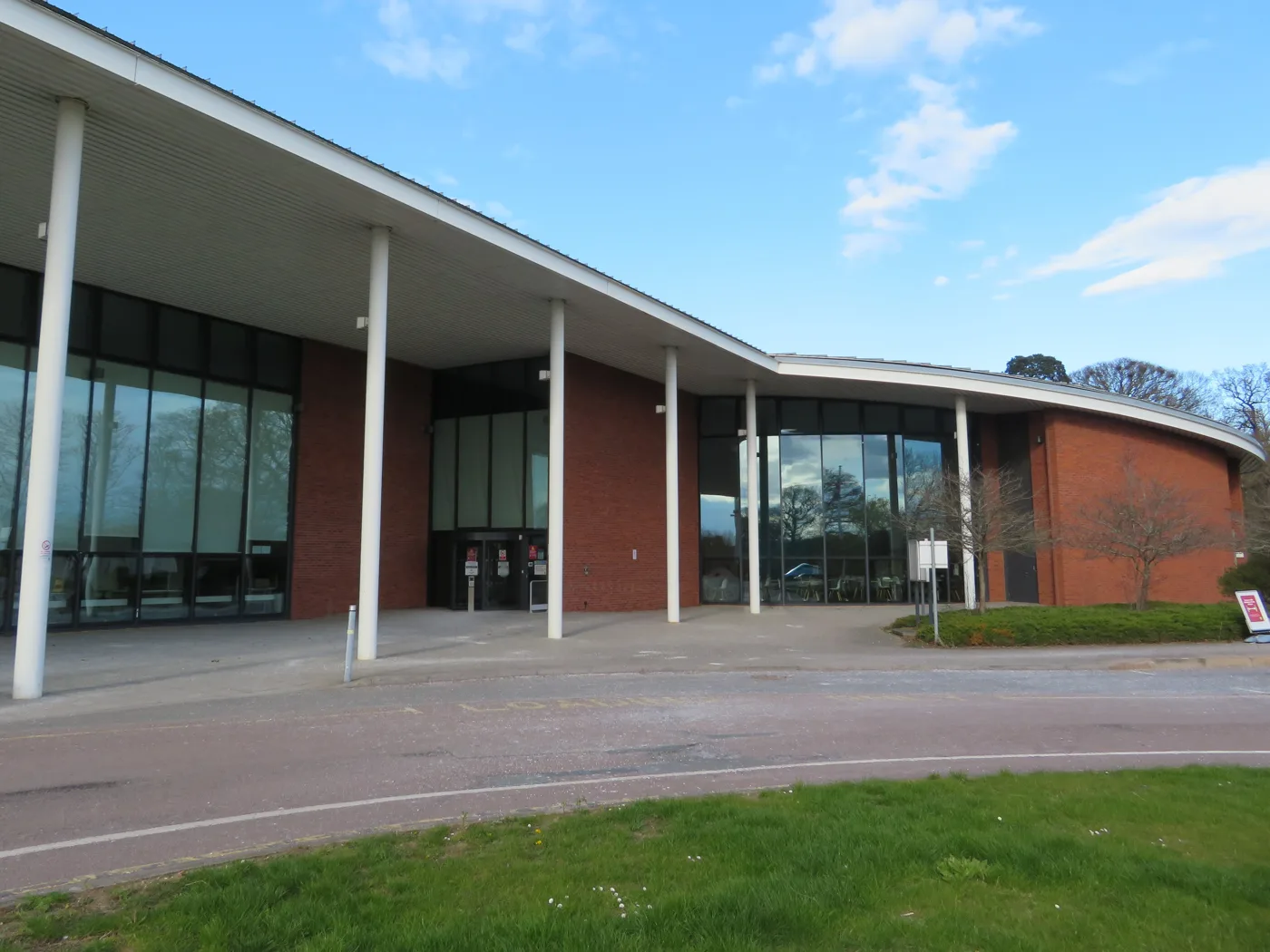
The committee meeting is held in public at Priory House, Chicksands, and the papers are on the meeting page.
Sources
- Central Bedfordshire Council, Local Council Tax Support Scheme 2027/28, report to the Corporate Resources Overview and Scrutiny Committee, 3 November 2026, published 27 October 2026
- Appendix A, equality impact assessment, 15 October 2026: household counts by band and type
- Appendix B, draft Council Tax Reduction Scheme 2027/28: bands and income limits
- Central Bedfordshire Council, Council Tax Support
Have your say